
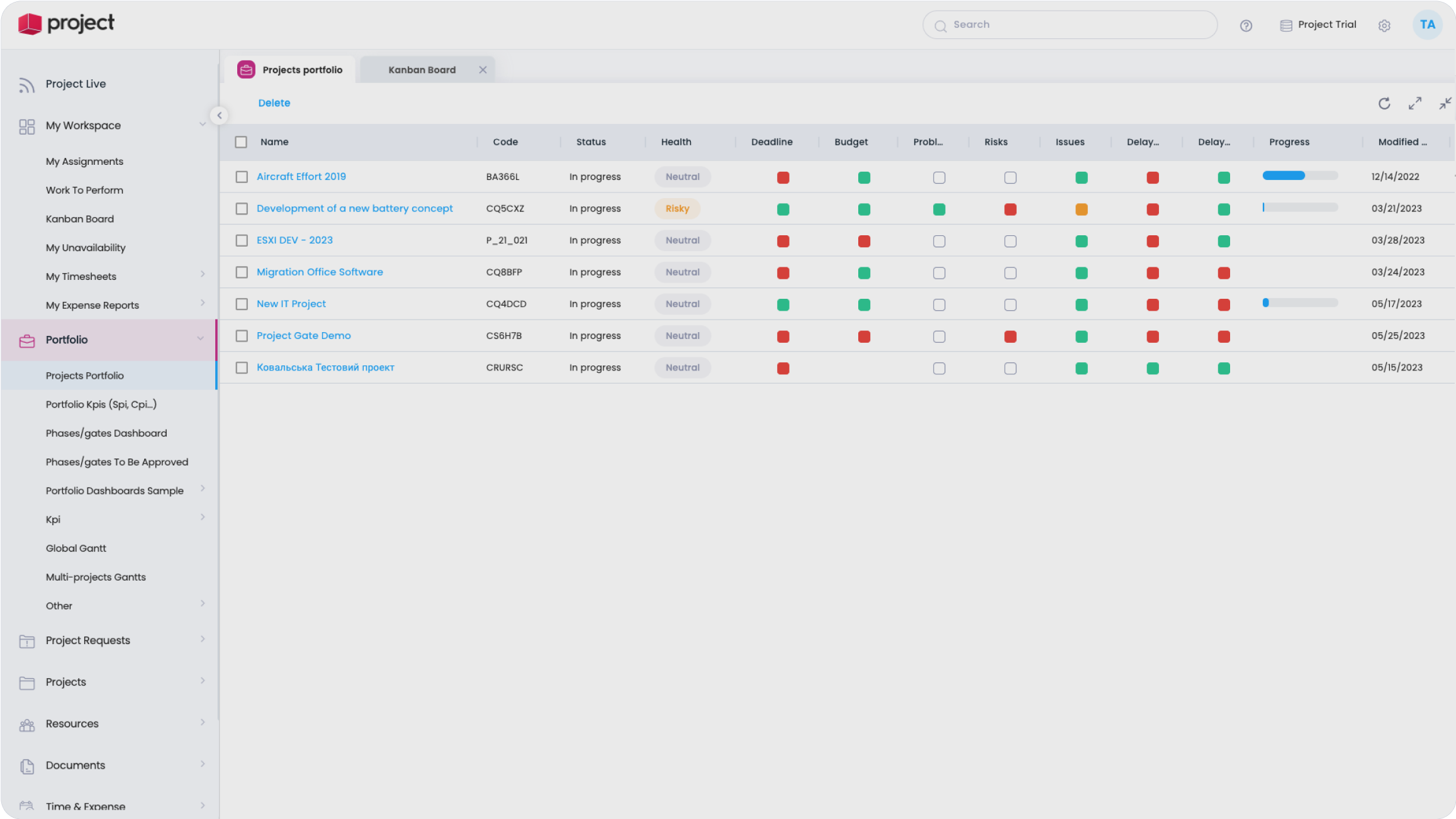











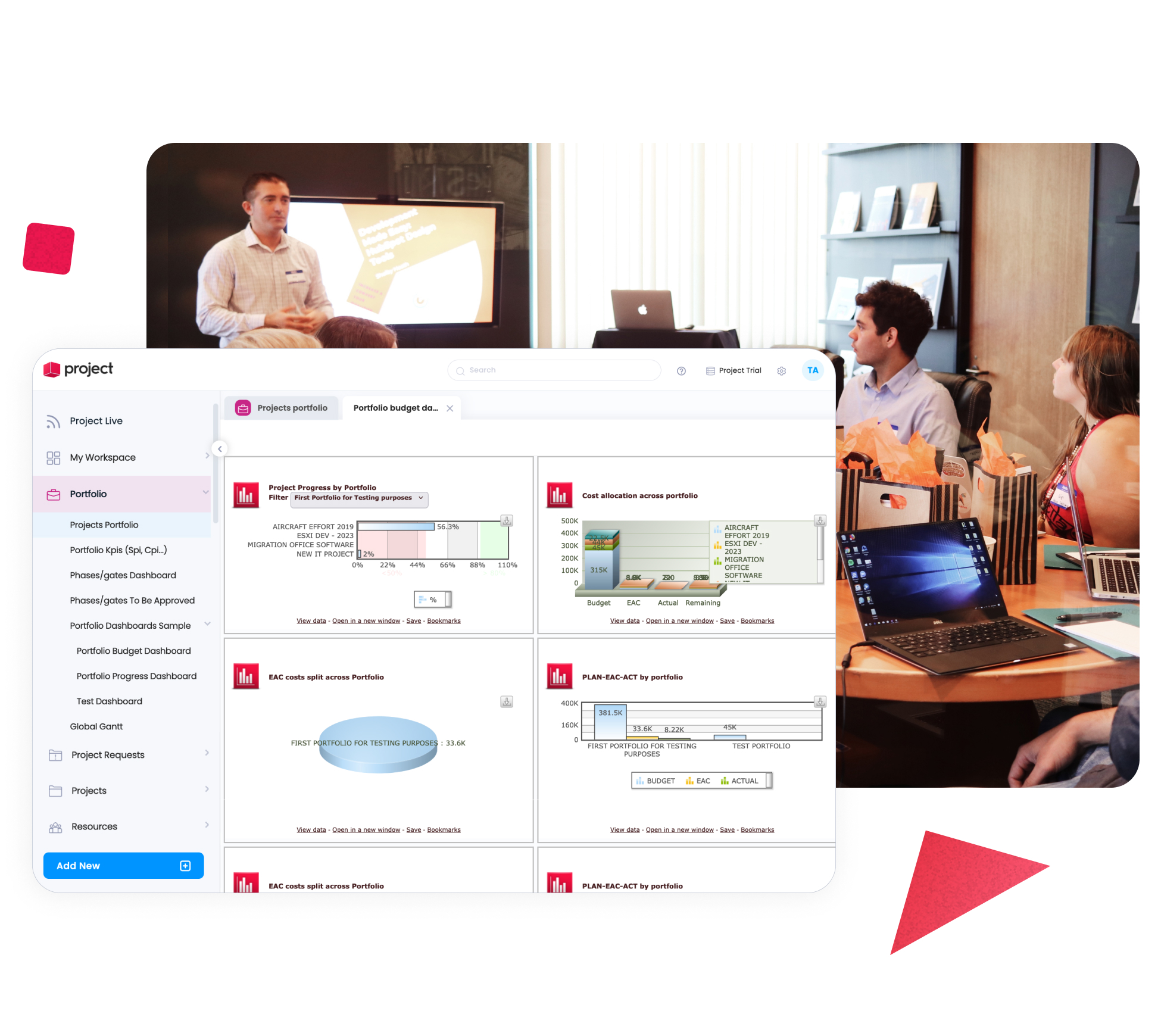

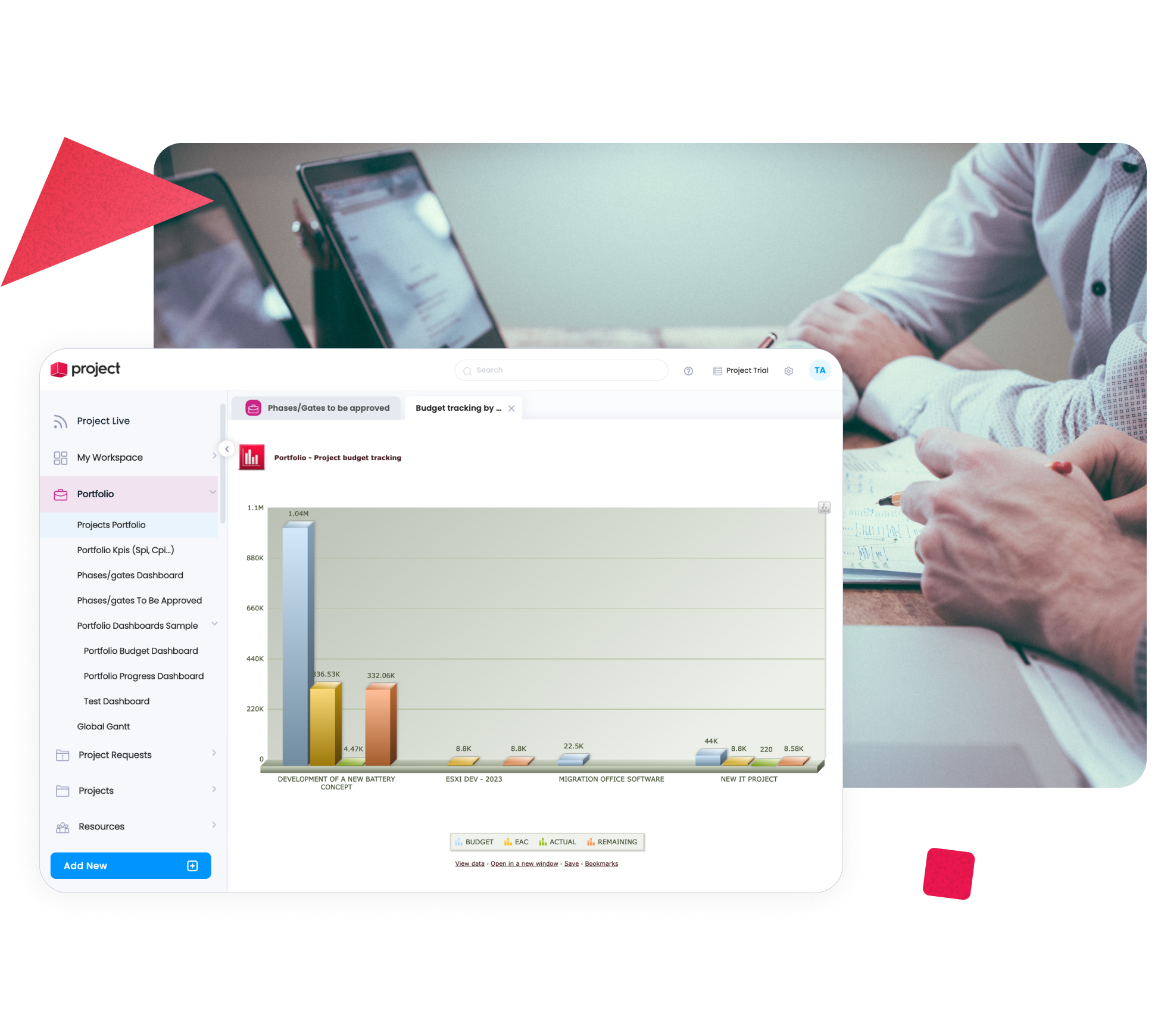

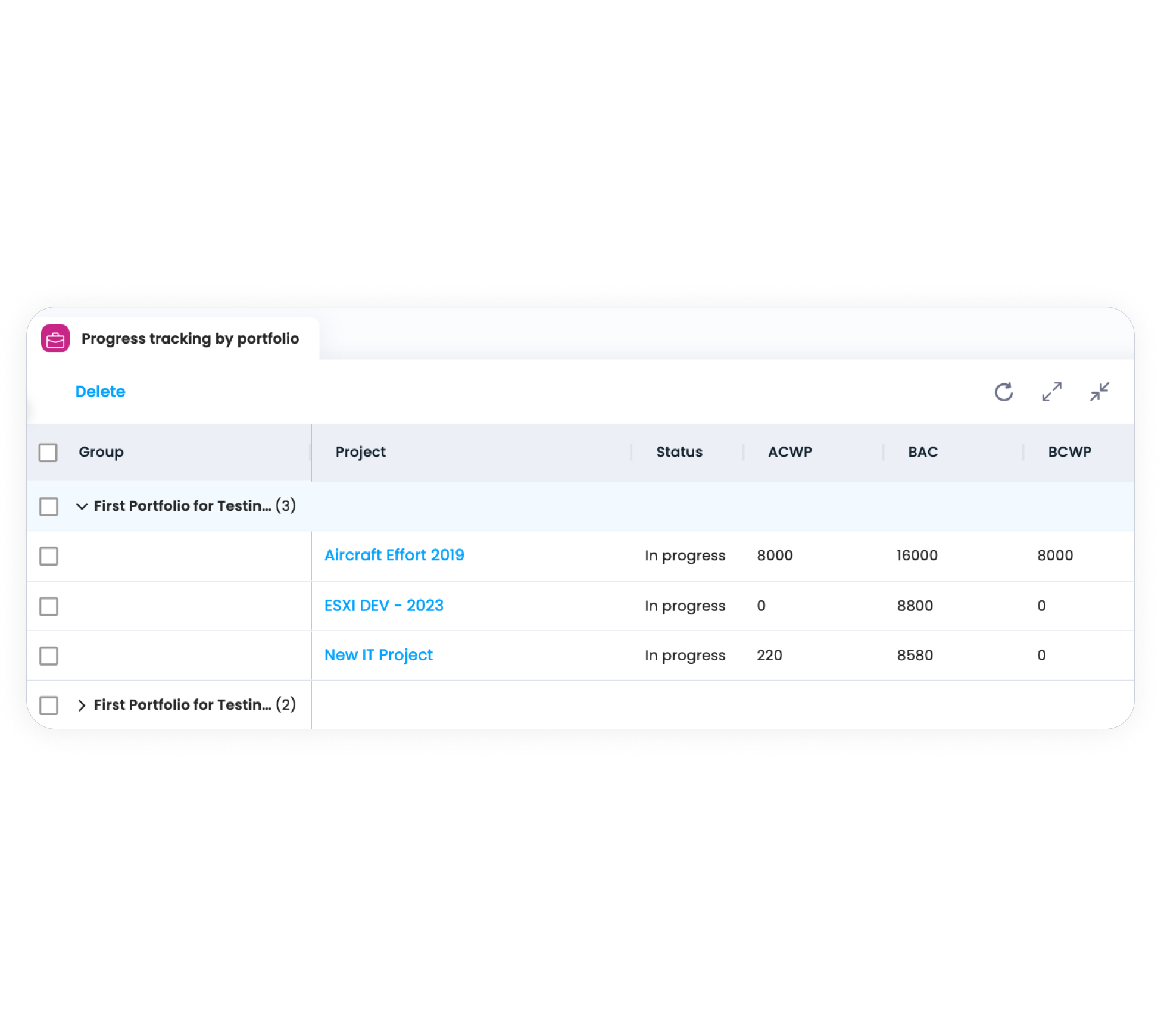










Project portfolio management (PPM) is a structured approach to selecting, prioritizing, and governing projects to ensure they align with an organization’s strategic objectives and investment constraints.
Rather than managing projects in isolation, PPM provides a portfolio-level view that enables organizations to evaluate initiatives based on value, risk, cost, and resource capacity. This allows decision-makers to fund the right projects, stop low-value initiatives early, and balance demand against available resources.
At its core, PPM focuses on decision quality and strategic alignment, not just project execution.
Project management focuses on the execution of individual projects, ensuring that scope, timelines, costs, and deliverables are managed effectively.
Enterprise project portfolio management operates at a higher level. It governs which projects should be executed in the first place, how they are prioritized, and how resources and investments are allocated across the entire organization. PPM introduces portfolio-level decision-making, governance, and visibility that go beyond the scope of any single project.
In short, project management delivers projects, while enterprise PPM controls investment, prioritization, and outcomes across all projects.
Project portfolio management tools that support complex approval and governance workflows are typically designed for enterprise environments where decisions span multiple roles, departments, and control layers.
These platforms go beyond basic project tracking by allowing organizations to configure structured approval workflows for project requests, phase reviews, budget approvals, risks, and changes. They also support role-based permissions, audit trails, and governance checkpoints to ensure decisions are traceable and compliant with internal policies.
Solutions like Cerri Project are built specifically for these use cases, offering a configurable workflow engine that adapts to an organization’s governance model rather than enforcing rigid, predefined processes. This makes them well suited for PMOs and enterprises managing regulated, cross-functional, or high-impact project portfolios.
Yes. Cerri Project supports flexible deployment models, including private cloud and full on-premise installations.
Organizations with strict security, compliance, or data-sovereignty requirements can deploy Cerri Project entirely within their own infrastructure, maintaining full control over data access, integrations, and system updates. For enterprises that prefer cloud delivery, Cerri Project is also available in dedicated private cloud environments, offering cloud accessibility without shared SaaS exposure.
This dual deployment capability makes Cerri Project well suited for regulated industries and security-sensitive enterprise environments.



 Project Management


 Portfolio Management

 Task Management


 Gantt Chart


 Kanban Board


 Scheduler


 Resource Management

 Time Tracking


 Expense Tracking


 Content Management


 Collaboration


 Reporting


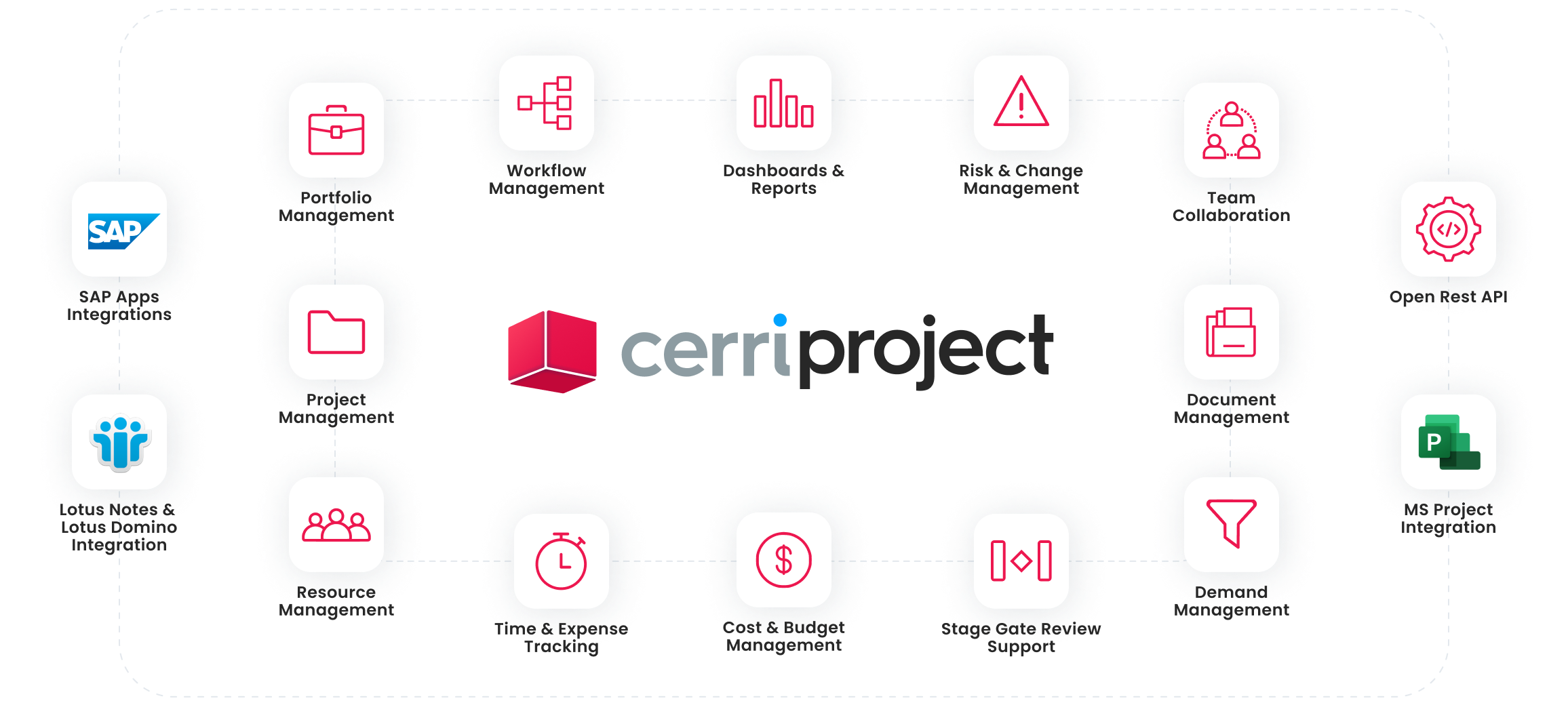
 Portfolio Management


 Project Management


 Resource Management


 Time & Expense Tracking


 Gantt Chart Planning
  Cost & Budget Management


 Demand Management


 Stage and Gate Review Support


 Document Management


 Team Collaboration


 Risk & Change Management


 Dashboards & Reports


 Workflow Management


 Integrations
 Customization
 Integrations
 Security
 Hosting
 Configuration